
I’ve grown used to the oohs and ahhs that often follow whenever I share my major, as unwarranted as I found it to be. I remember telling a coworker of mine once that I was a creative writing major and he said I’m so sorry. In the moment I had laughed, but after two years in college, I think I’ve finally grown to understand what he meant.
The tortured writer trope isn’t just a literary device, but a common experience for those cursed with creativity. Writing on some days can be the most rewarding feeling as you lose two or three hours to a Google document and 1000 words of progress. You’ll close your laptop feeling light after purging so many ideas, eager to come up with more and repeat the process. Other times your eyes will glaze from staring at a screen and your scalp will hurt from how hard you gripped it, almost as if you could rip the stagnant ideas out. It won’t matter how long you sit there or how frustrated you get because the words boycott your brain and hours are wasted. Suddenly, the writer is speechless, a blinking cursor their most hated sight. That is the duality of the creative process.
It is then that imposter syndrome strikes as the repeated experience of feeling incompetent or not good enough. The inability one has to feel validated by their successes makes them fearful of being exposed as the fraud they perceive themselves to be, a way of thinking that is especially familiar to creative writing majors. It can be hard to put deadlines on your ideas and deal with multiple projects being due each week, all the while seeing the ease with which some of your peers finish their own pieces. On top of that, the workshopping process is a breeding ground for insecurity and a great way to get stuck in a cycle of comparison. You don’t feel like your writing is to the same standard as others, and that makes you feel like you don’t belong as a creative writing major even more. When the imposter syndrome hits, it becomes easier to feel inadequate than it does to write, and suddenly you’re questioning your choice to try to make a hobby into a career.
There’s no universal cure to the thought processes that a person uses to convince themselves they’re not good enough, just as there’s no amount of words I could write arguing otherwise. Overcoming imposter syndrome is a part of the creative process that each writer will approach differently. It’s a challenge that ultimately leads to one having a better understanding of themselves, as well as more confidence in their capabilities.
Creative writing isn’t just the glamour of sitting in a coffee shop for hours while you construct new worlds. It’s the late nights spent editing your writing so you can submit it to a literary magazine before the deadline, only to receive an email months later saying you got rejected. It’s the pressure of coming up with ideas that feel unique or writing about old ones from a new perspective. It’s all that, but it’s also the gratification of finally getting published or the serotonin boost of finishing a project. Being a writer is having every negative experience overshadowed by the joy of doing what you love, and it’s also the sense of identity you create for yourself after conquering your own self-doubt. There’s no room for imposter syndrome when the page is already filled with Times New Roman.
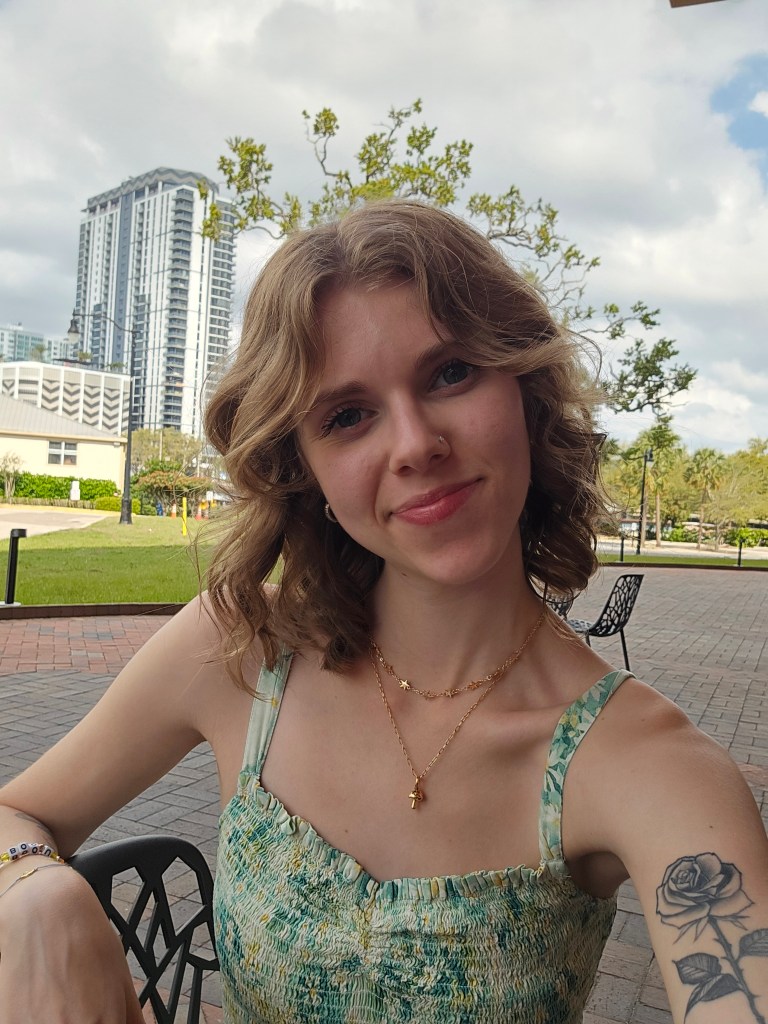
Madison Hillyer is a Creative Writing major with a Psychology minor at Florida State University. She hopes to one day turn her love of writing poetry into a career while also working in editing and publishing. When not focusing on her writing you can find her spending time with friends, enabling her coffee addiction, or rewatching Twilight.



 The Kudzu Review
Leave a comment